I purchased both bread makers myself. Neither machine was gifted, and this comparison is not sponsored.
This post contains affiliate links. If you buy through these links, I may earn a commission at no extra cost to you.
I made the exact same white bread recipe in the LCKSMAL and Osipoto bread makers, using the same ingredients and the Basic setting on both. I expected a few differences. I didn’t expect one loaf to come out with a beautifully rounded top while the other collapsed during baking.
Both loaves tasted delicious. But the LCKSMAL produced the better-looking loaf—and finished 45 minutes sooner. Here’s what I noticed during the test, what I can’t say for certain, and which bread maker I’d rather use.
LCKSMAL vs. Osipoto at a glance
| Feature or test result | LCKSMAL | Osipoto |
|---|---|---|
| Maximum loaf capacity | 2.5 pounds | 2 pounds |
| Basic cycle in this test | 2 hours, 55 minutes | 3 hours, 40 minutes |
| Automatic programs | 25 | 17 |
| Built-in scale | Yes | No |
| Fruit and nut dispenser | Yes | No |
| White bread result in this test | Rounded top and even shape | Collapsed top |
| Taste | Delicious | Delicious; soft inside |
Both machines also offer multiple loaf-size and crust options, a 15-hour delay timer, and a one-hour keep-warm function. These are the machines and settings I used; the cycle times above describe this particular test.
How I compared the two bread makers
For this comparison, I used the same simple white bread recipe and the same ingredients in both machines. I selected the Basic program on each and watched how the dough progressed through the cycles.
The recipe used measured ingredients rather than weights in grams or ounces, so I didn’t use the LCKSMAL’s built-in scale. Its fruit and nut dispenser wasn’t relevant to a plain white loaf either. For this test, I was interested in what happened after I pressed Start.
This was a practical home comparison, not a controlled test that isolated every variable. In particular, the machines have different capacities and different Basic programs. That matters when interpreting the results.

The Basic cycles were 45 minutes apart
The LCKSMAL’s Basic cycle took 2 hours and 55 minutes. The Osipoto’s took 3 hours and 40 minutes. That’s an extra 45 minutes for the Osipoto using the same recipe.
While watching the cycles, I noticed that the Osipoto included another complete rise. That made me wonder whether its longer Basic program might be contributing to the trouble I’ve seen with white bread. It’s a possibility, rather than something this comparison proves.
What happened to the loaves
The LCKSMAL loaf came out with a nicely rounded top, an even shape, and a light golden crust. It was the picture-perfect loaf I hoped to get.
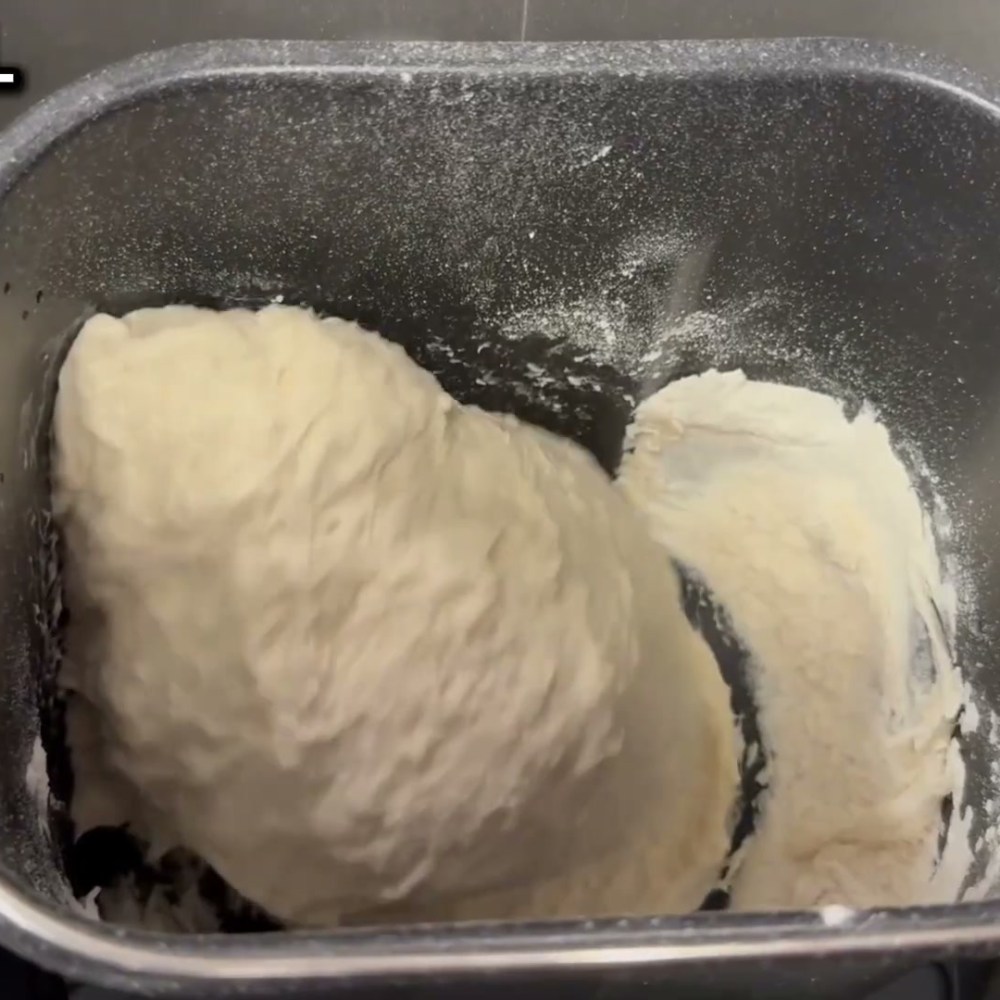
The Osipoto dough looked promising earlier in the cycle. By the time baking began, though, it looked as if it might have risen too far. During baking, the top collapsed.
This wasn’t my first white loaf to collapse in the Osipoto. I’ve had it happen with another white loaf as well. But I’ve also made wheat bread in this machine that came out with a nice domed top, so I know it can produce a beautifully shaped loaf.
Why did the Osipoto loaf collapse?
I can’t say for certain. Two things stood out: the longer rise sequence and how full the bread pan was.
The Osipoto’s pan was very full, with dough rising almost to the top. The larger, 2.5-pound LCKSMAL had considerably more room. The collapse could have been related to the longer rise, the amount of dough in the smaller pan, or a combination of the two.

I wouldn’t use this test to claim that every Osipoto loaf will collapse. My experience has been more specific: I’ve seen it happen more than once with white bread, while wheat bread has worked well for me.
How did the bread taste?
Fortunately, the collapsed top didn’t ruin the Osipoto loaf. It was still soft inside and tasted great. Both loaves were delicious.
If I hadn’t been comparing them side by side, I probably wouldn’t have cared very much about the Osipoto’s appearance. But with both loaves on the counter, the difference was obvious. The LCKSMAL gave me the better-looking result in less time.
The LCKSMAL extras I actually like
Beyond the results of this test, I like the LCKSMAL’s larger capacity and built-in scale. When a recipe lists ingredients by weight, I can leave the bread pan in the machine and add ingredients directly into it instead of pulling out a separate kitchen scale.
I do need to be careful when adding ingredients this way: I don’t want flour or liquids spilling down around the heating elements.
The LCKSMAL also has a fruit and nut dispenser that adds mix-ins automatically at the appropriate point in the cycle. The Osipoto doesn’t have a built-in scale or that dispenser. The LCKSMAL offers 25 automatic programs compared with the Osipoto’s 17.
Those extras are useful, but they weren’t what decided this white bread comparison for me. The finished loaf and shorter cycle mattered more.
What I would try differently with the Osipoto
If I were regularly making white bread in the Osipoto, I’d experiment with a smaller loaf, a little less yeast, or a different program to see whether that improves the shape. Those are adjustments I would try—not fixes I’ve confirmed in this comparison.
Which bread maker would I choose?
Based on my experience with both machines, I’d rather use the LCKSMAL. I like the extra capacity and built-in scale, and in this test it made a beautifully shaped white loaf 45 minutes faster.
The Osipoto still made bread I enjoyed eating. If taste were the only thing I considered, I’d have been happy with either loaf. But I’ve now seen white bread collapse more than once in the Osipoto, and the LCKSMAL gave me the result I preferred with this same recipe.
Check current prices: LCKSMAL Bread Maker · Osipoto Bread Maker (affiliate links).
Watch the side-by-side bread maker test
You can see the machines and finished loaves in my full LCKSMAL vs. Osipoto video comparison. For more tests like this, subscribe to Everything Home on YouTube. Machines that look similar on paper can give surprisingly different results once I actually bake with them.
Save this comparison for later

Leave a Reply